
2026-09-08 · Craig Ellison
How High Altitude Affects AC Performance in Security-Widefield Homes
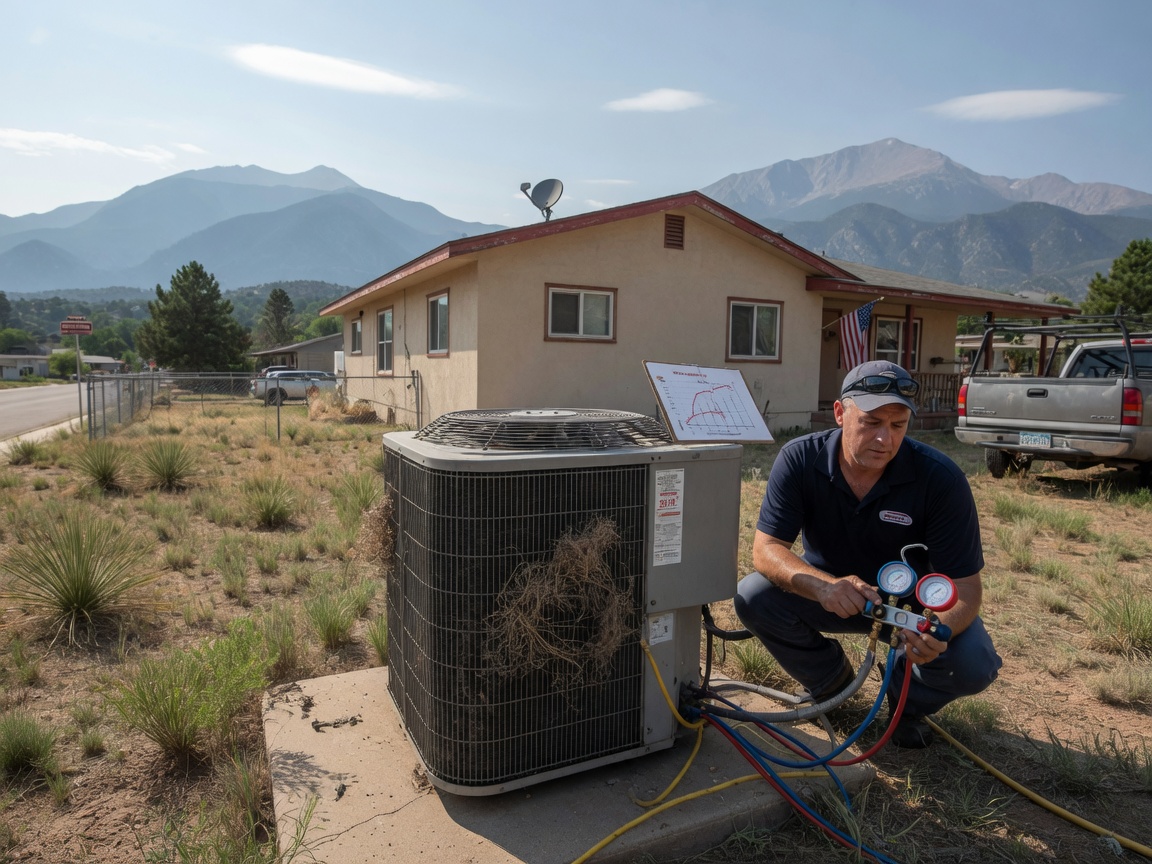
At elevations near 5,800 feet in Security-Widefield, air conditioning systems lose roughly 10-20% of their rated cooling capacity compared with sea-level performance because thinner air carries less heat away from the condenser coils. This reduction shows up most during the hot summer afternoons common in El Paso County when daytime highs often reach the low 90s. The effect stems from lower air density rather than any fault in the equipment itself.
How Lower Air Density Changes Heat Exchange
Thinner air at Security-Widefield and Widefield elevations moves across condenser coils with less mass, so each cubic foot removes fewer BTUs of heat. A 4-ton unit that delivers full capacity near Colorado Springs may effectively act closer to a 3.2- to 3.6-ton unit once installed here. Fountain Valley homes see the same pattern because the entire region shares the semi-arid high-plains climate. Condensers must run longer cycles to reach the same indoor temperature, which raises energy use even when the thermostat setting stays unchanged. Older housing stock in Security often has smaller or shaded lots that limit natural airflow around outdoor units, compounding the density issue. Technicians routinely measure actual delivered capacity on site rather than relying on nameplate ratings when diagnosing performance complaints.
Compressor Workload and System Longevity
The compressor works harder to maintain pressure differentials when ambient air holds less mass, shortening expected service life in many Widefield installations. Homeowners notice the difference during July and August when systems that once cycled off regularly now run 70-80% of the time. This extended runtime increases wear on valves and windings. In Fountain homes near Fountain Creek, higher dust loads from dry creek beds add another layer of stress because dirty coils further reduce heat transfer. Regular filter changes become more critical here than in lower, more humid regions. Systems installed without high-altitude adjustments often show earlier capacitor and contactor failures. AC maintenance schedules should account for these altitude-driven runtimes rather than generic manufacturer intervals.
Dehumidification Limits in Local Climate Conditions
Security-Widefield’s dry summers mean indoor humidity rarely exceeds 30-35%, yet the reduced airflow across evaporator coils still limits moisture removal when sudden monsoon moisture arrives. Residents in Widefield neighborhoods sometimes report indoor humidity spikes that feel more uncomfortable than the actual temperature suggests. Because the system already operates at reduced sensible capacity, latent capacity drops as well. Oversized units common in Pueblo and Colorado Springs transplants exacerbate short-cycling once moved to higher ground. Proper refrigerant charge becomes even more critical; a 5-10% undercharge that might go unnoticed at sea level quickly shows up as poor performance at 5,800 feet. AC repair calls often trace back to charge issues rather than component failure.
Practical Adjustments for Local Homeowners
Start by verifying that the outdoor unit has at least 24 inches of clearance on all sides so the thinner air can still reach the coils. Check that attic insulation and duct sealing match the longer runtimes altitude demands. When an older unit reaches 8-12 years, compare actual delivered capacity against original specifications before deciding on replacement. What to check first when your AC fails on a hot Security-Widefield day outlines simple homeowner steps that often restore performance without a service call. Track runtime hours on the thermostat if available; consistent increases signal the altitude effect rather than a sudden malfunction. Typical costs for common emergency AC repairs near Widefield help set expectations when altitude-related wear finally requires attention.
When to Schedule Professional Assessment
If indoor temperatures rise more than 3-4 degrees above the set point during peak afternoon heat, schedule an evaluation rather than waiting for complete failure. Technicians familiar with El Paso County conditions measure static pressure, superheat, and subcooling values adjusted for local elevation. These readings reveal whether the system is simply altitude-limited or has developed a separate issue. Homes in Fountain Valley with south-facing exposures and minimal tree cover often benefit from shade structures or high-efficiency variable-speed units that better match reduced air density. Early assessment prevents emergency breakdowns during the first sustained heat wave of summer.